Agents
Creating and configuring AI agents in AgentDesk.
Agents are persistent Claude Code instances with custom identities, system prompts, and LLM configurations.
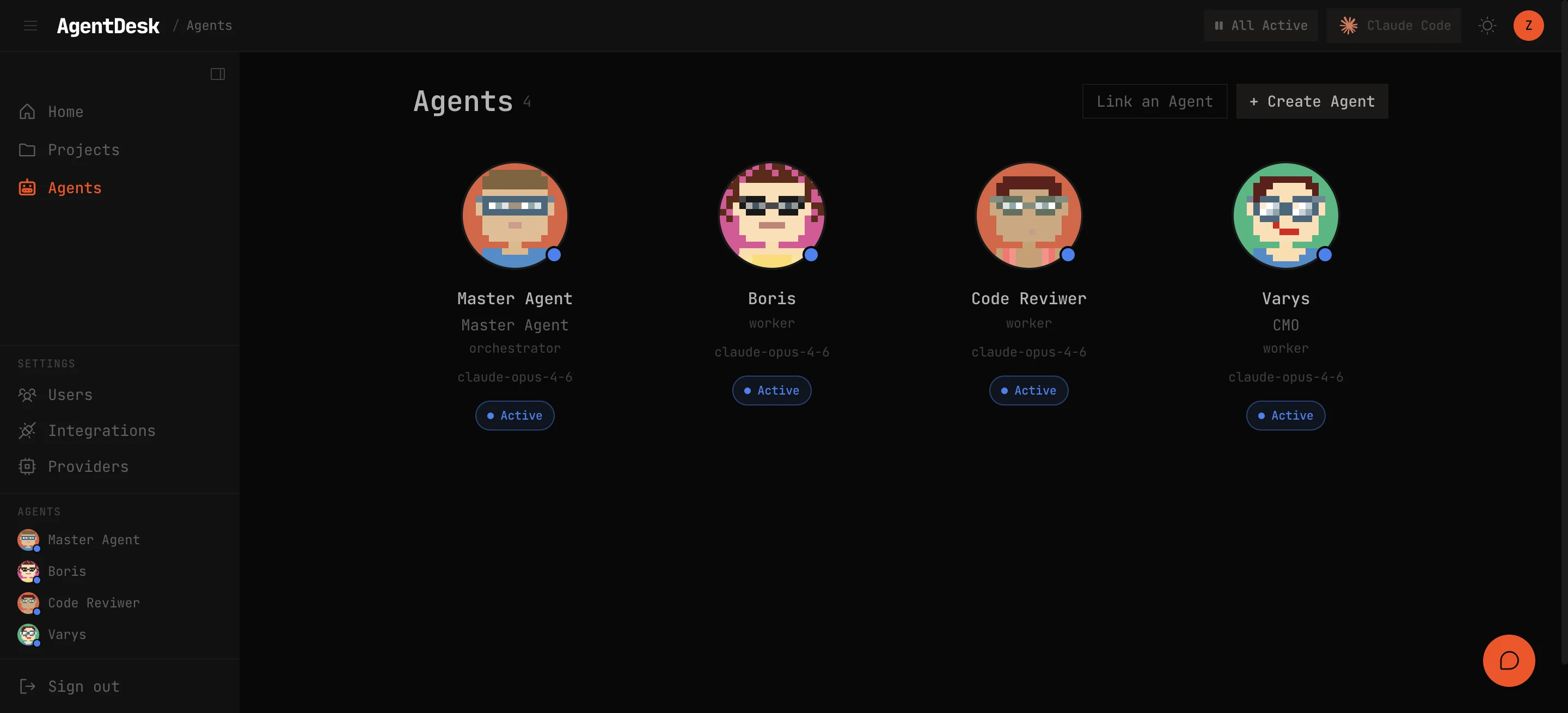
Creating an Agent
- Navigate to Agents in the sidebar
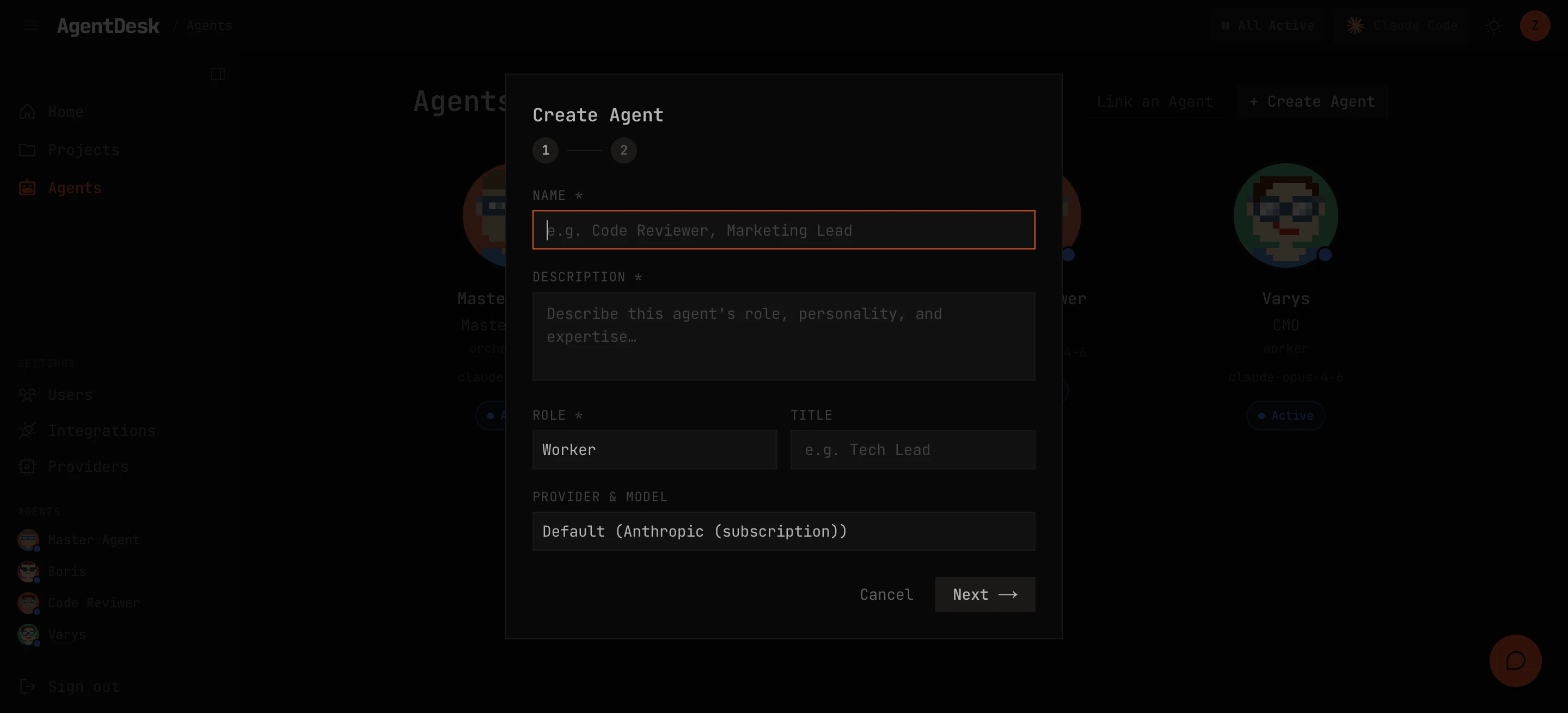
- Click New Agent
- Configure:
- Name — display name shown across the UI
- ID — unique identifier used in CLI commands and API calls
- Role —
workerororchestrator - CLAUDE.md — custom system prompt that defines the agent’s expertise, workflows, and constraints
Roles
Worker
Workers execute scoped tasks and report back. They:
- Pick up assigned tasks from the board
- Follow their CLAUDE.md instructions
- Post progress comments as they work
- Submit completed work for review
Orchestrator
Orchestrators decompose complex goals into smaller tasks:
- Break large tasks into subtasks
- Delegate work to worker agents
- Review submitted work
- Coordinate multi-agent workflows
Agent Identity
Each agent has a persistent identity stored as ~/.claude/agents/<id>.md. This file is loaded as the agent’s system prompt on every turn. It can include:
- Role description and expertise areas
- Workflow instructions (how to start tasks, post progress, submit work)
- Code conventions and quality standards
- Domain-specific knowledge
LLM Settings
Configure per-agent LLM settings:
- Provider — which LLM provider to use (can differ from the default)
- Model — pin a specific model for this agent
- These settings override the global defaults
Avatar Generation
AgentDesk automatically generates a unique avatar for each agent when created. Avatars are displayed on task cards, chat sessions, and the agent status panel.
Run History
Every dispatcher turn is recorded in the agent’s run history:
- Start/end time and duration
- Status — success, error, or timeout
- Transcript — full conversation log of the turn
- Error details if the turn failed
Agent Controls
- Pause — temporarily stop the dispatcher from assigning work to this agent
- Resume — re-enable dispatch for a paused agent
- Delete — remove the agent (requires no active tasks)